Historic takahē photograph links past and future conservation efforts

Southern Lakes Sanctuary has taken guardianship of a rare piece of New Zealand conservation history – an original takahē photograph dating back to the 1940s – now on loan as a result of a remarkable chain of stewardship spanning generations. 

The image traces its origins to one of the most significant moments in Aotearoa’s conservation story: the rediscovery of the takahē in 1948. At the time, the species had been declared extinct not once, but twice – with only four confirmed sightings prior to 1898. But for Invercargill doctor Geoffrey Orbell, uncertainty remained. As he later reflected, “Only four takahē had been found prior to 1898 and it was now supposed to be extinct. That word ‘supposed’ stimulated my boyish sense of adventure.” 

The rediscovery that changed conservation history

On 20 November 1948, Orbell led a small expedition including Neil McCrostie, Rex Watson and Joan Watson (nee Telfer) deep into the remote Murchison Mountains of Fiordland National Park. Acting on reports of unusual bird calls and footprints in the tussock, the group pushed into an isolated valley now known as Lake Orbell. There, they encountered what had been lost for half a century: a large, flightless bird, half a metre tall, with iridescent blue and green plumage  the takahē (then known as Notornis).

The original takahē photograph

Tracing the photograph’s journey

The photograph now held by Southern Lakes Sanctuary comes from Joan Watson’s estate, directly linking it to that rediscovery era and the people involved. 

Its more recent provenance reflects the continued effort to preserve that legacy. Dunedin art collector Marshall Seifert purchased the photograph through Haywards Auction House, before passing it to Gibbston Valley-based art consultant Leah Seifert, who specialises in sourcing rare and original works. 

Recognising its historical significance, the photograph was recently acquired by the family of the late Ted Bennett – a close friend of Orbell who played a role in early takahē conservation efforts in the Murchison Mountains. Bennett often joined Orbell and others on expeditions to help restore and protect takahē habitat, contributing to the foundations of the species’ long-term recovery.

Ted’s legacy continues today, including through the naming of a takahē at Orokonui Ecosanctuary near Dunedin.

Ted Bennett on an early takahē expedition. Courtesy of the Bennett whānau

An unexpected modern connection

That legacy found a new connection in 2025, when Bennett’s granddaughter, Jaimee Maha, partnered with Southern Lakes Sanctuary to campaign for takahē in Bird of the Year. The collaboration helped build wider public awareness and support for the species, while also forging a meaningful relationship between Maha and the Sanctuary. 

It is through that connection that the photograph is now on loan to Southern Lakes Sanctuary. In many ways, it has come full circle – entrusted by a family whose own story is deeply intertwined with the takahē’s recovery. 

The next chapter for takahē

Today, that recovery is being written in places like the Rees Valley, where Southern Lakes Sanctuary is helping shape the next chapter. Through sustained conservation efforts, the valley is now home to the largest wild population of takahē outside the Murchison Mountains – a significant milestone in the species’ return. 

The photograph is a tangible link between rediscovery and recovery, connecting the pioneering efforts of the past with the conservation work underway today to help secure the takahē’s future. 

Whio return to the Rees Valley for first time in 50 years

A sighting of two whio (blue duck) in the Rees Valley last week is being celebrated as a significant milestone for conservation in the Southern Lakes region.

The pair were spotted by our field team while installing a new predator trapping line near Hunter Creek, as part of ongoing work to protect takahē.

Whio have not been recorded in the area since the 1970s. Their return is a strong indicator that large-scale predator control across the valley is improving the outlook for native wildlife.

Evidence that conservation efforts are working

Southern Lakes Sanctuary CEO Paul Kavanagh says the conditions that enabled the return of takahē to the Rees Valley in 2025 are likely contributing to the reappearance of other native species.

“The conservation work needed to support takahē are the same measures that benefit many other native species,” he says. “Seeing whio appear in the valley is hugely exciting and rewarding for all the people who have been part of this journey. It’s proof that years of hard work and collaboration are starting to deliver real results for native taonga.”

Whio pair at Hunter Creek

The whio sighting follows another encouraging milestone in 2025, when western weka were confirmed in the Rees Valley – another species that had been absent from the area for many years.

These moments reflect the impact of coordinated predator control across the wider landscape, with Southern Lakes Sanctuary working closely alongside the Department of Conservation’s Takahē Recovery Programme, Ngāi Tahu, Rees Valley Station and our partner group Routeburn Dart Wildlife Trust.

A return with deep local significance

The return of whio has particular significance for those who have lived and worked in the valley for decades.

Rees Valley Station – a historic high country property with a long pastoral history – has been farmed by the Scott family for generations.

Iris Scott, who has lived on the station since the 1970s, carried on farming the land after the death of her husband, Graeme Scott, and now manages it alongside her daughters, Kate and Diane. She says the return of whio is something she has long hoped to see again.

“Releasing takahē into the Rees Valley last year was already a landmark moment for us,” she says. “But seeing whio again is beyond what I’d hoped for. I remember seeing them when I first started farming here in the 1970s, and it’s always been a personal dream to see them return.”

Iris Scott, Rees Valley Station

Estelle Pura Pera-Leask (Ngāi Tahu, Whakatōhea, Ngāti Ruanui), trustee for Southern Lakes Sanctuary, says the return of native species also reflects a deeper relationship between people and the environment.

“For Ngāi Tahu, the return of species like whio reflects the restoration of relationships between people, whenua and waterways, and the responsibility of kaitiakitanga to protect them for future generations.”

Looking ahead

While it is too early to know whether the pair may go on to breed, the sighting is an encouraging sign that sustained predator control and collaboration across the landscape are starting to deliver results.

Continued collaboration between landowners, iwi, community groups and funding partners will be essential to ensuring native species can return and thrive across the region.

Project Update VIII Jan 2026

Momentum for nature: Our latest project update!

It’s been another significant chapter across the Sanctuary, with momentum building in every corner of the landscape. From mohua relased in the Matukituki to takahē chicks on the ground following their return to the Rees Valley, the signs of recovery are tangible and deeply encouraging.

Alongside these milestones, our predator control footprint continues to expand and our hub partners are scaling up monitoring and innovation. This work is only possible because of the collective effort behind it – community groups, iwi, landowners, volunteers, funders and supporters all playing their part in restoring biodiversity across the Southern Lakes.

Good news for Arrowtown’s biodiversity: less possums, more birds?

Arrowtown and the surrounding Coronet Face area are seeing encouraging signs for local biodiversity, thanks to ongoing work between Whakatipu Wildlife Trust and Southern Lakes Sanctuary – and an army of volunteers and supporters.

Since this work began, over 4,500 possums have been caught, and anecdotally locals are reporting more native bird life – trends that upcoming biodiversity monitoring should hopefully confirm.

Arrowtown’s possum population is shrinking – even as our trap network grows

Since 2022, the Arrowtown AT220/520 trap network has expanded from 28 to 117 traps, dramatically increasing coverage across the basin edge. Despite this growth, the average number of possums caught per trap has fallen steadily – a classic sign of mature suppression. While total possums removed continue to rise, the decline in per-trap catches shows that possum densities are genuinely dropping, giving native birds and trees a much-needed reprieve.

Arrowtown key numbers 

Year 

Number of traps

Total possums caught 

Avg possums per AT trap 

2022 

28 

431 

15.4

2023 

47 

549

11.6

2024 

47 

540 

11.5 

2025 

117 

1078

9.2

Southern Lakes Sanctuary’s Whakatipu Coordinator, Bonnie Wilkins, reluring possum traps

Coronet Face: rapid knockdown to sustained control

Coronet Face, a newer project spanning steep slopes and a diverse mix of tussockland, regenerating beech pockets, exotic woodlands and native plantings, has seen fast-moving results. Initial possum knockdowns were high, but in just two years the area has transitioned into sustained suppression, demonstrating the impact of coordinated predator control across complex and challenging terrain.

Coronet Face key numbers 

Year 

Number of traps 

Total possums caught 

Avg possums per AT trap 

2023 

27 

381

14.1

2024 

41 

777

18.9 

2025 

42 

450 

10.7 

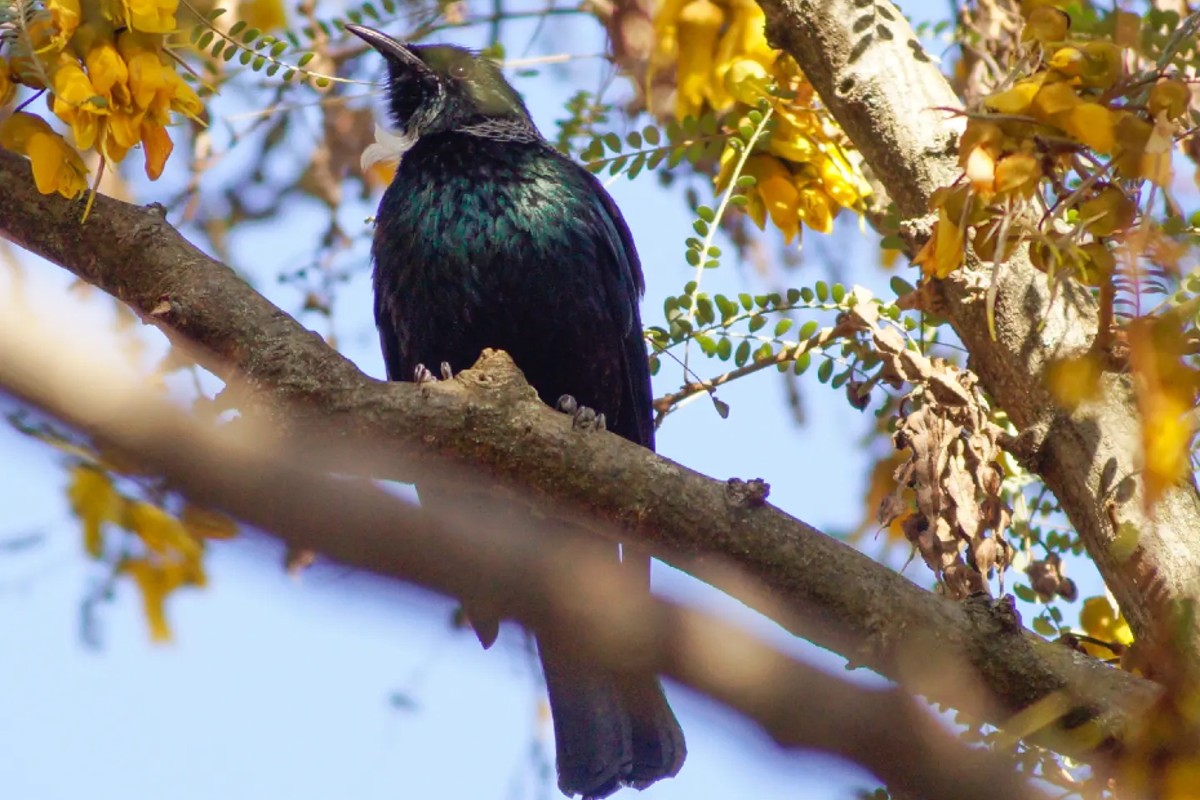
Tūī © Ben Carson

Whakatipu Wildlife Trust are about to commence bird monitoring which we hope will confirm this and Southern Lakes Sanctuary has recently installed acoustic monitoring devices to support this.

“Our data show a clear shift from knockdown into suppression,” says Paul Kavanagh, Chief Executive of Southern Lakes Sanctuary. “These results – fewer possums, more resilient birdlife, recovering forests – are only possible because of sustained effort across the community. Ongoing biodiversity monitoring is essential to measure that progress – and it’s an area where further support from local businesses can make a real difference.”

Heatmaps showing possum waxtag results

From our highest initial measure in April 2023

To our most recent measure in October 2025.

As well as the waxtag results, the camera results are also showing a reduction in possums, with the latest October measure seeing the lowest number of possums since beginning the camera monitoring.  Although there was a spike in May 2025, this seems to have been caused by a few individuals learning to access the mayonnaise lure and returning each night, rather than an actual increase in the possum population.

A community effort

These results are made possible through a broad and committed community effort. Alongside the core partnership between Whakatipu Wildlife Trust and Southern Lakes Sanctuary supported by dozens of volunteers, groups like Predator Free Arrowtown, Coronet Face Trapping Group, Te Tapu o Tāne, NZSki, Soho Property Ltd and Treespace are all actively trapping across the landscape

This work is further strengthened by generous financial support from The Hills, the late Sir Michael Hill and his family, Rod Drury/TRAC and QLDC. Southern Lakes Sanctuary has provided specialist knowledge and coordination to integrate trapping and monitoring at a landscape scale.

This momentum also complements the significant mahi of other landholders and community groups. Soho Property Ltd has continued its extensive animal pest control programme across the Mahu Whenua Covenants, removing 2,344 goats and 156 pigs in 2025. In partnership with QLDC, they worked to clear the hill behind the Coronet Forest block, eliminating a further 289 goats from council land in two targeted shoots.

Community groups are also delivering long-term gains for biodiversity. Arrowtown Choppers and volunteers have helped clear around 100 hectares of wilding pines (in addition to the sustained work by Wakatipu Wilding Control Group and Soho Property Ltd), while large-scale native planting is rebuilding habitat across the catchment.

Arrowtown Choppers have led the planting of more than 35,000 native plants, including 29,000 along the Sawpit Gully Track and over 6,000 trees in Bush Creek, planted with the help of Arrowtown School and local Scouts. Whakatipu Reforestation Trust have also planted more than 4,000 native plants around Bush Creek near the Chinese Village. Together, this work is restoring forest structure and creating habitat that will support even more abundant native birdlife over time.

Arrowtown Choppers planting day, Sawpit Gully

Anna Harding-Shaw, Executive Director of Whakatipu Wildlife Trust, says: “This is exactly the kind of outcome we hope for when communities, volunteers, landowners and conservation organisations work together. Hearing locals tell us they’re seeing more native birds in the area shows the real, positive impact of sustained predator control.”

The outcome: safer habitats for native birds, healthier forests and a visible shift toward ecological recovery.

Keen to get involved? Visit

https://whakatipuwildlifetrust.org.nz/ or https://arrowtownchoppers.co.nz/

GSD Workforce joins Southern Lakes Sanctuary: a homegrown partnership strengthening conservation

What began as a bold response to the uncertainty of the COVID-19 pandemic has grown into one of the Southern Lakes’ most inspiring conservation success stories. 

GSD Workforce – the conservation project delivery agency founded by AJ Hackett Bungy NZ – has officially begun its next chapter under the umbrella of Southern Lakes Sanctuary. The transition marks the natural evolution of a four-year partnership that has helped protect landscapes, species and communities across the region. 

A pandemic idea that became a conservation force 

GSD (Good Safe Deeds) was born during the height of COVID-19, when AJ Hackett Bungy NZ (AJHBNZ) co-founder Henry van Asch saw an opportunity to retain skilled local workers displaced from tourism and redirect their expertise toward community and environmental projects. Supported through the Jobs for Nature programme, GSD quickly became a lifeline – providing jobs while accelerating vital conservation delivery. 

Since then, GSD’s team has been at the heart of Southern Lakes Sanctuary’s operations, working across the Whakatipu, Wānaka and Hāwea catchments on predator control, threatened species recovery, biodiversity monitoring and community engagement. This work has helped protect native species and rebuild ecological resilience at a landscape scale. 

Lake Whakatipu © Ben Carson

How Bungy helped us go bigger, faster 

By tapping into AJHBNZ’s existing business infrastructure – workshops, offices, IT systems, and vehicles – GSD was able to upscale Southern Lakes Sanctuary’s field delivery far faster than would have been possible otherwise. The relationship has been strengthened by a blend of government and private support, including $300,000 in cash donations from AJHBNZ. 

Southern Lakes Sanctuary CEO Paul Kavanagh says the impact has been transformative. 

“AJ Hackett Bungy’s backing was truly catalytic. Their investment, business acumen and belief in what we were trying to achieve gave us the foundation to grow into a sustainable organisation capable of delivering large-scale conservation impact.” 

With GSD now formally part of the Southern Lakes Sanctuary Trust, the partnership continues. AJHBNZ will remain an active supporter through ongoing donations, equipment, office resources and community initiatives. 

“We’re incredibly grateful for their continued partnership and support as we bring GSD into the Southern Lakes Sanctuary Trust. Together, we’re building on an extraordinary legacy of innovation and community collaboration,” says Kavanagh. 

Four years of impact across the Southern Lakes 

GSD’s 25-strong local workforce has delivered extraordinary results across the region. Working in partnership with Southern Lakes Sanctuary, the team has: 

  • installed more than 6,700 new traps and bait stations since 2022, bringing the network to over 13,000 across the landscape 
  • provided stable employment for skilled workers during a period of major economic disruption 
  • carried out extensive conservation mahi in some of the region’s most loved places across the Southern Lakes 

AJ Hackett Bungy CEO, David Mitchell at takahē release in the Rees Valley. Credit: RealNZ

Building the future together 

AJHBNZ co-founder Henry van Asch says bringing GSD into Southern Lakes Sanctuary is a natural evolution of the journey so far. 

“GSD is a great example of how collaboration between businesses and communities can address a need and create lasting impact. What began as a response to a challenging time has evolved into a sustainable, community-driven success story.”  

With GSD now part of Southern Lakes Sanctuary, the momentum continues. More species supported. More landscapes protected. More communities connected to conservation. 

A success story built by business, community and a belief in doing good – together. 

Mohua make their comeback in the Matukituki Valley

A new chapter has begun for the West Matukituki Valley, with the joyful return of mohua (yellowhead) to the forests of Mt Aspiring National Park. 

Once common throughout Aotearoa’s South Island, these bright, lively songbirds are now one of our rarest native forest birds – but thanks to years of collective effort, they’ve found a new home in the Southern Lakes. 

A return years in the making

On Tuesday 14 October, a team of experts carefully captured 50 mohua on Pukenui (Anchor Island) in Fiordland and translocated them to a release site up-valley from Aspiring Hut. With the breeding season approaching, the timing gives the birds a chance to settle into their new home and establish territories. 

The return of the mohua is the result of a major conservation collaboration between the Matukituki Charitable Trust, Ngāi Tahu, the Department of Conservation’s Mohua Recovery Group, the Mohua Charitable Trust and Southern Lakes Sanctuary.

Mohua release in the Matukituki Valley

Credit: Geoff Marks

Restoring balance to a special place

For more than a decade, the Matukituki Charitable Trust has been working tirelessly to control predators across the West Matukituki Valley – an area that attracts over 100,000 visitors a year and is renowned for its spectacular alpine landscapes, including the Rob Roy Glacier. 

This long-term predator management, supported by the Department of Conservation and Southern Lakes Sanctuary, has created the conditions needed for native wildlife to thrive again. 

When the Trust began predator control here more than a decade ago, our hope was always that one day we could bring back species like mohua” say Matukituki Charitable Trust founding trustees Derek and Gillian Crombie. “To now see that happening is hugely rewarding for everyone who has supported the project and a positive step for biodiversity in the valley.” 

A growing chorus of native species

Predator control in the Matukituki has already brought benefits to a range of native species including toutouwai (South Island robin), kākāriki, tītitipounamu (rifleman), South Island kākā, kea, pīwauwau (rock wren), and braided river birds such as tarapirohe (black-fronted tern) and pohowera (banded dotterel). Bats, lizards and native mistletoe are also benefitting from this mahi. 

With mohua now back in the valley, this special place is closer to supporting a rich, resilient web of native wildlife – a milestone years in the making. 

Paul Kavanagh, Chief Executive of Southern Lakes Sanctuary, reflects on the achievement: Bringing mohua back to the Matukituki is a really special moment. It shows what’s possible when conservation organisations, mana whenua, funding partners and government agencies work together. The years of predator control and planning are paying off, and seeing these birds back in the valley is a milestone for everyone involved. 

Credit: Geoff Marks

The story of mohua

Bright, musical, and once common throughout New Zealand, the mohua is a striking forest songbird now mostly confined to small, scattered populations in the South Island and on Rakiura Stewart Island, with fewer than 5,000 birds remaining. 

Quick facts: 

  • Mohua live in tight-knit flocks and communicate with a variety of high-pitched chirps and trills 
  • They nest in tree cavities, making them especially vulnerable to predators like rats and stoats 
  • Once abundant, their range has shrunk dramatically, largely due to predation by rats and stoats – but conservation is helping populations recover in protected areas 
  • Featured on New Zealand’s $100 note, a symbol of their cultural and ecological importance 
  • For a threatened species, mohua have a relatively high reproductive rate, giving them strong potential to recover when predators are controlled 

The return of these songbirds to the Matukituki Valley adds strength to national recovery efforts – and brings life, sound and colour back to one of our most beautiful alpine valleys. 

Credit: Geoff Marks

Kā mihi nui to our funding partners

The Leslie Hutchins Conservation Foundation, Lotteries Environment and Heritage, Pacific Development and Conservation Trust, Stout Trust (proudly managed by Perpetual Guardian), Otago Regional Council’s Ecofund, New Zealand Nature Fund, Tūpiki Trust and Roki whose generous support helped make this milestone possible. We’re also grateful for in-kind support from Over The Top, who provided the heli-transfer to and from Pukenui Anchor Island. 

Sarah Forder, Southern Lakes Sanctuary and Over The Top - mohua release

Credit: Geoff Marks

Vote Takahē: A Manifesto from Southern Lakes Sanctuary

Citizens of Aotearoa, feathered friends, lovers of tussock – lend us your ears. 

Southern Lakes Sanctuary is proud to announce our official endorsement of the takahē for Bird of the Year 2025

Why? Because this bird isn’t just a bird. It’s a movement. It’s a symbol. It’s the heavyweight champion of comeback stories. 

The campaign promises of Make Takahē Great Again

📣 We will build more tussock. Because a salad bar in every valley is a right, not a privilege. 

📣 We will defeat stoats, feral cats, and other shady characters. Predators have no place in our future. Full stop. 

📣 We will strut proudly down the alpine runways. Flightless? Yes. Fabulous? Absolutely. 

📣 We will bring Big Bird Energy to the future of conservation. From golf courses to gardens, boardrooms to backcountry huts. 

Five reasons to back the takahē

  1. The Comeback King – Declared extinct in 1850. And again in 1898. Rediscovered in 1948. Released in the Rees Valley in 2025. Four acts, one legend. 
  2. Big Bird Energy – At around 3kg, takahē bring more muscle to the ballot than any parrot could dream of. 
  3. Limited Edition Candidate – Only ~500 takahē exist in the wild. Forget career politicians – this is your once-in-a-lifetime vote. 
  4. Straight Outta Fiordland, Now Repping the Rees – Local bird, global ambitions. 
  5. Community Candidate – It takes a village and a whole lot of grit to protect and restore a species. A vote for takahē is a vote for what communities can achieve together. 

The big picture

Jokes aside, this campaign is about more than memes and mock rallies. The takahē story is living proof that conservation works. That extinction doesn’t have to be. That when we fight for wild places, we can win. 

So, when it’s time to cast your vote in Bird of the Year 2025, make it count. 

Vote for the comeback. 

Vote for the community. 

Vote takahē. 

Because flightless but fearless this bird is going places. 

Smarter Traps, Safer Skies: how AI is helping kea in the Southern Lakes

High above the Southern Alps, the cries of kea echo across ridgelines and valleys. These playful, intelligent alpine parrots are a taonga species – unique to New Zealand and admired for their cheeky character. But alarmingly, kea are heavily threatened by predation and habitat loss. 

For Southern Lakes Sanctuary, protecting kea is not just about saving a single species – it’s about restoring balance across an entire mountain ecosystem. And now, innovation is changing the game.

The challenge of protecting kea

Kea face a double threat: they’re vulnerable to introduced predators like stoats, feral cats and possums. At the same time, their natural curiosity often puts them at high risk of injury when willingly interacting with the conservation tools and predator traps designed to protect them. 

Conventional predator traps are designed to kill efficiently – but kea, being endlessly inquisitive, can’t resist investigating. Sadly, this can lead to accidental deaths of the very species conservationists are trying to save. 

It’s a painful paradox: we need effective predator control to give alpine species like kea a chance, but we also need to ensure kea themselves are kept safe. And with an estimated population of fewer than 7,000 individuals remaining in the wild, which is just 10% of the population of kiwi, the race is on.

Enter AI and smarter trapping

Southern Lakes Sanctuary has been investing in innovative trapping solutions that rethink the way predator control works. One of the most promising developments is the use of AI-enabled AT520 traps created through a collaboration between FTP Solutions and NZ AutoTraps. These devices don’t just sit passively in the bush – they “see” what’s moving and use machine learning to recognise the difference between a target species such as a stoat, possum, rat and and a non-target (such as kea or other native species). 

Instead of triggering automatically, these smart traps only activate when a target species is correctly identified. That means kea and other native species can poke, prod, and play without harm, while possums and rodents face an unwelcome end. 

We trialled these AI-enabled AT520 traps in non-kea zones and the Kiwi Park in Queenstown before getting approval from DOC to include them in our Wye Creek project – a collaboration with Queenstown Climbing Club – and the results are promising. Not only have no kea been caught but they’re also improving efficiency for the team: self-resetting, tracking visits and activity (even without a catch) and sending real-time images and alerts to the office. This is drastically improving efficiency when it comes to trapping in remote terrain and enables data-driven decisions.  For a landscape as vast and rugged as the Southern Lakes, this kind of efficiency could be transformative. 

Trialling kea proof traps at Kiwi Park Queenstown

Collaboration is key

Innovation alone won’t save kea – it takes people. The Wye Creek network has been made possible through the shared vision and support of Queenstown Climbing Club, Whakatipu Wildlife Trust, Tūpiki Trust, DOC and Altitude Brewing.  

The Southern Lakes Sanctuary also works closely with groups like the Kea Conservation Trust, who bring in deep expertise around kea behaviour, monitoring, and advocacy. By combining local predator control at scale with specialist knowledge, the goal is to make the Southern Lakes one of the safest regions in New Zealand for all alpine species. 

Installing the communications gateway for this network at Wye Creek

What’s next?

Every time a kea takes flight – mischievous, fearless, and full of character – it reminds us what’s at stake. More than just a conservation icon, kea embody resilience, curiosity, and the wild spirit of the Southern Alps. 

The work, however, is far from done. In late 2025, phase two will introduce eight smart live-capture feral cat cages, tackling another major threat to kea and other taonga species. 

One thing is certain: if the call of the kea still echoes across these mountains for generations to come, it will be because people came together and got smarter about how to protect them. 

Want to learn more about these traps?

Listen to Phil Green, our Technical and Field Advisor, explain this network to Clare Concannon on RNZ here. 

Community Open Days at The Hills: 22 & 23 Sept 2025

Southern Lakes Sanctuary and The Hills invite you to be part of a one-of-a-kind community event that blends world-class golf, contemporary sculpture and conservation in action. 

This is more than a day on the green – it’s a rare opportunity to play or visit one of New Zealand’s most iconic courses while backing the biodiversity of the Southern Lakes.

Every donation raised will help fund vital community-led conservation across the landscapes that make this part of Aotearoa so extraordinary. 

🌿 Play The Farm 

Bring friends or whānau for a relaxed round on The Hills’ 9-hole, par-3 course. A fun and accessible way to support the cause.  

  • Minimum donation: $30 per person 
  • Eligibility: All welcome but players under the age of 13 must be accompanied by an adult
  • Tee times: First time at 9am and last at 2pm
  • Bookings essential: golf@thehills.co.nz  

🗿Sculpture Tour

Experience the artistic wonder and outdoor beauty of a hosted sculpture tour around the incredible creations of artists such as Mark Hill, Grant Williams, Matt Patte and Sean Henry. 

  • Minimum donation: $20
  • Tours depart: Hourly from 10am 
  • Includes: Hot drink & audio guide 
  • No bookings required  

🍽 Lunch in the Clubhouse

Dine with a view. Enjoy a beautiful two or three-course lunch in the stunning Hills Clubhouse. 

  • Two-course set menu: $70 
  • Three-course set menu: $85 
  • Sittings: 12.00 to 1.30pm and 1.30 to 3pm  
  • Bookings essential: clubhouse@thehills.co.nz

Play the Championship Course – Sold Out!

A rare opportunity to play 18 holes on the iconic Hills Championship Course before it closes in 2026 for major renovations. 

  • Donation: $165 per person (or $195 with golf cart) 
  • Eligibility: All players must have a current NZ Golf handicap 
  • Limited to 100 players per day 
  • Tee times: First time at 9am and last at 2pm

The Hills & Southern Lakes Sanctuary a shared vision for nature 

Set among the dramatic hills of Arrowtown, The Hills is far more than a golf course – it’s a creative and cultural landscape, shaped by a love for art, land and legacy. Founded by Sir Michael Hill, The Hills was always envisioned as a place where nature, design and experience could come together in unexpected ways. 

Southern Lakes Sanctuary is proud to be supported by The Hills and the Hill family – a backing that reflects our shared commitment to protecting the native species and wild places that define this region.  

These special open days on 22 and 23 September represent the power of community, creativity, and collaboration – and every swing, stroll and sculpture viewed helps us take one more step toward a thriving future for nature. 

Can’t make it but want to support? By donating to Southern Lakes Sanctuary, you’re backing large-scale predator control, species recovery and the community groups driving real change on the ground.

donate

Wild Wētā

High in the mountains, a prehistoric insect fights to survive — and we’re just beginning to understand how to help.

Tucked among the loose rock and scree of our alpine zone lives one of Aotearoa’s most remarkable — and most elusive — creatures: the Southern Alps giant wētā Deinacrida pluvialis.
Hefty, nocturnal, and restricted to only the dampest, most isolated alpine recesses, this wētā is now seriously threatened with extinction.

Once more widespread, this species has been driven to the margins of its former range by the arrival of fuzzy, toothed invaders — mice, stoats, and other predators that didn’t evolve alongside these slow-moving insects.

Unlocking secrets in the alpine zone

Since 2023, our team has been venturing into the backcountry to learn more about where these giant wētā survives, and how we can monitor it reliably without disturbing this fragile ecosystem.

In early 2025, our efforts paid off — we discovered a previously unknown population of these incredible insects. Every glimpse, every track, every new site adds to our understanding and strengthens the foundation for future protection. This season’s work was generously funded by the Leslie Hutchins Conservation Foundation.

A wētā that walks the night

We’ve developed a bespoke tracking tunnel network to measure wētā activity. In 2025, 72% of our tunnels showed signs of giant wētā, confirming high levels of activity in some alpine sites.

On two survey nights alone, more than 100 individual giant wētā were observed along just two of our tracking tunnel lines — showing that while these insects may be rare across the landscape, they’re capable of existing in surprising abundance where conditions are right.

But if they can thrive in these pockets, why have they disappeared from so many others?
The answer, we believe, lies in predation.

invest in nature

Next steps: turning data into action

We’re now preparing to calibrate our tracking tunnel network using a capture-mark-recapture approach. This will allow us to compare the number of tunnels tracked with actual wētā numbers from nocturnal surveys — refining our ability to accurately monitor population size and trends.

Tracking tunnels are simple, non-invasive, and widely used in conservation — but how sensitive are they for alpine insects? How do they stack up against other survey methods?
These are the questions we’re working to answer.

Once we have a robust monitoring tool, we can begin to trial predator management strategies in the alpine zone — but until we know how to measure success, we’re holding off on large-scale interventions.

Standing at the beginning of something important

Alpine wētā conservation is still in its infancy. These creatures have outlived glaciers and geological upheaval — but introduced predators may prove to be their biggest test yet.

We feel incredibly privileged to make a small contribution to the protection of D. pluvialis, and we know there is still so much to learn.

🦗 Want to dive deeper?
Read more in New Zealand Geographic’s story, “Citadel of the Giants” by Bill Morris — an exploration of this species and its alpine stronghold.